
Tip of the Week
Balance Activities
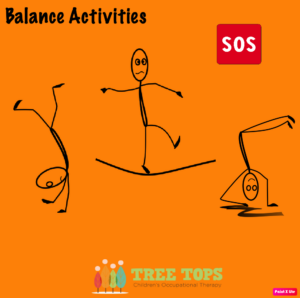
Balance activities – we need good balance to enable us to take part in daily living skills, sports, games and playing with others safely without causing injury (using the protective responses). Balance skills include: core strength gross motor skills visual motor skills proprioceptive input vestibular input What is static and dynamic balance Both static and…
Read MoreLetter and number reversals

Letter and number reversals – it is not unusual for young children to reverse their letters and numbers when they learn to read and write. However, reversals and poor handwriting could be due to the child being unable to: recall the way to record a letter or number what the letter or number looks like…
Read MoreHoliday anxiety?
Holiday anxiety? Going on holiday with your children can be a really hard and stressful time. Sensory processing issues can escalate with even the tiniest and simple things. To prevent sensory overload and avoid the meltdowns, check out our video for some helpful tips. Some more helpful tips for holiday anxiety: take a sensory travel…
Read MoreBalance Activity Ideas

Balance activity ideas – good balance is the ability to adjust and control our body movements for daily activities such as: walking sitting dressing/undressing hopping skipping riding a bicycle We develop our balance skills from a very early age: head control ability to adjust our movements moving against gravity It is also important to develop…
Read MoreDifficulties brushing teeth

Does your child have difficulties brushing teeth? Brushing teeth is an important part of our oral hygiene routine but for a child with sensory sensitivities, this task can be exceptionally difficult. If a child is over responsive to touch, this can result in them not tolerating anything in or around the mouth therefore no tooth…
Read MoreWhy are bilateral skills important?

Why are bilateral skills important? Well, these skills are vitally important as we use them for so many different movements and actions that require both sides of our body to perform together such as: walking playing catching balls cutting When you are unable to cross the body midline, it means that the two sides of…
Read MoreA sensory seeker or avoider?
Is your child a sensory seeker or avoider? Take a look and see! The Seeker – hyposensitive The child will: See out certain types of input in order to meet their lack of sensory input their body is receiving. Craves proprioceptive input ie bumps/crashes into objects or people, plays rough, jumps around. Enjoy lots of…
Read MoreScissor Skill Practice
Scissor skill practice – did you know there are many skills a child needs before mastering this activity? In order to hold a pair of scissors and snip/cut along lines etc, your child will need a precision grasp on the scissors, use them in a perpendicular position and have good dexterity with the thumb in…
Read MoreMindfulness Calming Craft Activity
Here is a lovely mindfulness calming craft activity that your child can make from scratch. The activity below is a breathing exercise: Do you feel that your child sometimes needs to chill out? Do they present as anxious, stressed, have lots of meltdowns (especially when they arrive home from school or going somewhere new), dislike…
Read MoreLetter and Number Reversals
When a child starts to write, it is very common to see letter and number reversals, especially the letters b and d. How many times have you seen this happen? However, it does not mean your child has dyslexia if this occurs. Reversals are the norm up to approximately 7-8 years of age. Sometimes a…
Read More